

Gates of Olympus 2 — Structural Overview
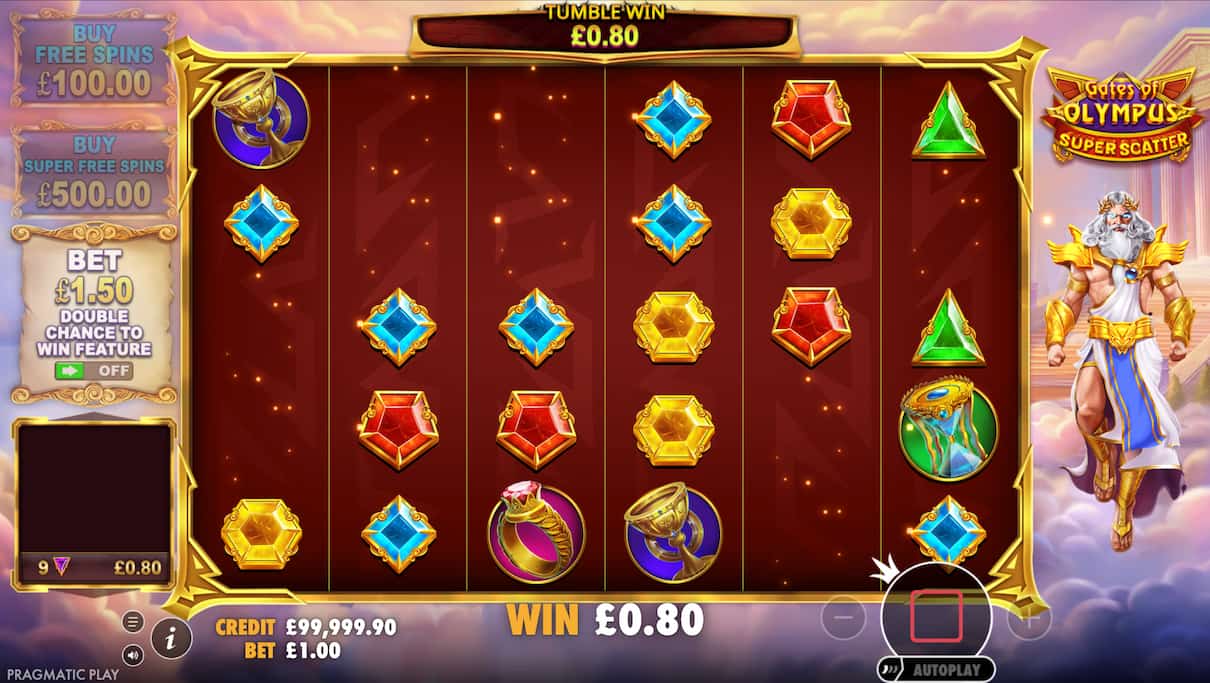
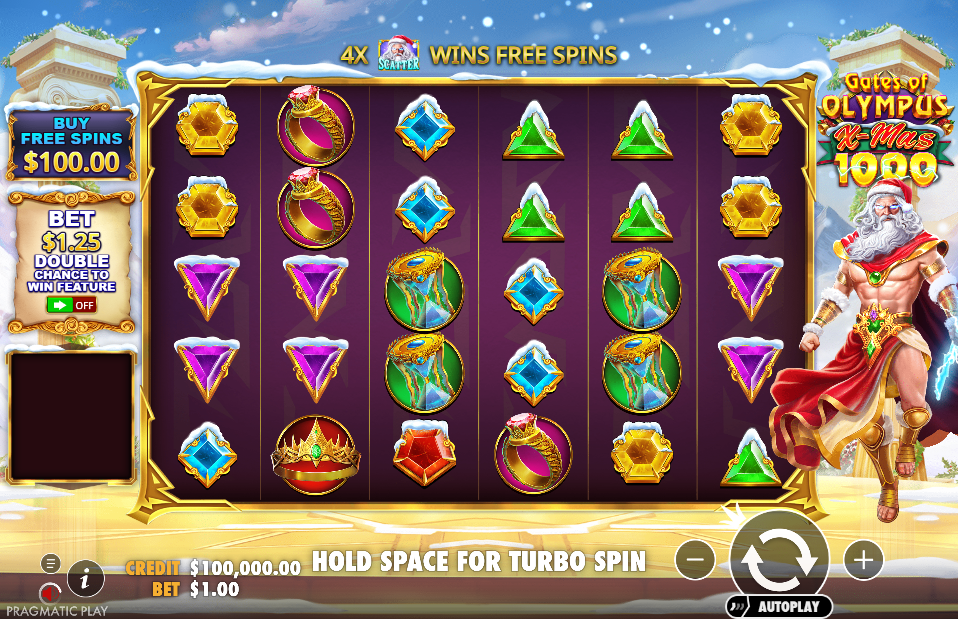
Gates of Olympus 2 is built on a 6×5 grid architecture using scatter-based win evaluation. Unlike fixed-line slot formats, outcomes are determined by symbol count rather than position. A minimum of eight matching symbols anywhere on the grid forms a winning combination.
This removes linear dependency and introduces positional neutrality.
The structural decision reshapes gameplay rhythm. Instead of horizontal or diagonal pattern tracking, the system evaluates cluster density across the entire grid. This creates non-linear distribution behaviour.
The game does not rely on fixed paylines.
It relies on probability concentration.
Grid Logic & Win Formation
The 6-column, 5-row matrix allows for high symbol density per spin. Combined with tumble mechanics (detailed in the next block), this architecture supports extended single-spin sequences.
Core structural attributes:
- 6×5 grid (30 symbol positions)
- 8+ matching symbols required
- Scatter-based evaluation
- Tumble continuation logic
- Multiplier interaction layer
By eliminating paylines, the game reduces visual complexity while increasing outcome variability.
The evaluation model is mathematically transparent. Every spin is independent and governed by RNG principles.
Volatility Positioning
Gates of Olympus 2 operates within a high-volatility mathematical profile. This implies:
- Larger payout concentration in fewer events
- Extended neutral sequences
- Higher amplitude swings in session balance
Volatility is not an aesthetic choice. It is a probability distribution model.
Short sessions may produce minimal returns. Long sessions expose wider variance ranges. This structure is suited for players who understand delayed distribution mechanics.
The game does not promise frequency.
It is structured around potential concentration.
RTP Framework
The theoretical Return to Player (RTP) percentage may vary depending on configuration. While the payout percentage can differ across deployments, the volatility model remains constant.
RTP represents:
- Long-term expected return
- Measured over millions of spins
- Independent of short-term experience
It does not represent:
- Guaranteed payout timing
- Win frequency indicator
- Profitability prediction
Understanding the distinction between RTP and volatility is essential when evaluating this slot.
Thematic Discipline & Visual Structure
The mythology-driven theme provides visual identity without overwhelming interface clarity.
Key design characteristics:
- High-contrast symbol differentiation
- Clear multiplier tagging
- Controlled animation pacing
- Centralised grid dominance
Visual elements support readability rather than distraction.
The interface prioritises mechanical visibility over decorative motion.
Session Orientation
Gates of Olympus 2 is structured for medium-to-long session engagement rather than rapid micro-cycle interaction.
Because volatility is elevated:
- Balance movement may be irregular
- Multiplier spikes may occur unpredictably
- Extended neutral phases are statistically normal
This creates a session rhythm that is wave-based rather than linear.
Players engaging with this slot should approach it as a variance-driven product rather than a frequency-driven one.
Tumble Engine & Spin Continuation Logic
At the core of Gates of Olympus 2 lies the tumble engine. When a winning combination is formed, the matching symbols disappear and new symbols fall from above within the same spin cycle.
This creates a layered outcome structure:
- Initial spin evaluation
- Removal of winning symbols
- Refill from upper grid
- Re-evaluation
- Continuation until no new win is formed
Unlike fixed-spin systems, this mechanism allows a single wager to generate multiple payout phases.
The tumble mechanic increases:
- Spin depth
- Probability clustering
- Variance layering
However, it does not alter fundamental independence. Each new cascade is still governed by RNG.
Multiplier Drop Logic
Multipliers appear randomly during spin sequences. They are applied only after the tumble cycle completes.
Structural characteristics:
- Random multiplier values
- Applied cumulatively within a single spin
- Reset outside bonus rounds
- Persistent accumulation during bonus mode
This introduces delayed amplification rather than instant inflation.
The multiplier does not increase hit frequency.
It increases payout amplitude when conditions align.
This distinction defines the game’s volatility behaviour.
Bonus Trigger Structure
The bonus feature activates when four or more scatter symbols land on the grid.
Key structural aspects:
- Fixed number of free spins
- Multiplier persistence during bonus
- No guaranteed profit during feature
- High exposure to spike clustering
The bonus round increases volatility concentration but does not guarantee outcome intensity.
It is an exposure amplifier, not a payout promise.
Probability Layering & Distribution Rhythm
The game’s probability architecture combines:
- Base spin volatility
- Tumble extension probability
- Multiplier occurrence weighting
- Bonus trigger frequency
These layers interact to produce irregular distribution curves.
The result is wave-like session behaviour rather than linear reward pacing.
To illustrate this structure, below is a volatility distribution model.
Volatility Distribution Curve
Bonus Round Architecture
The bonus feature in Gates of Olympus 2 is designed as a variance amplifier rather than a “reward stage”. Structurally, it changes the distribution profile by allowing multiplier accumulation to persist across consecutive spins within the feature.
Key elements that define bonus exposure:
- Free spins operate as a bounded sequence (a fixed number of spins)
- Multipliers are allowed to accumulate during the feature
- The accumulation layer shifts payout mass toward fewer but heavier events
- The feature does not guarantee a positive outcome, even when triggered
The primary difference between base mode and bonus mode is not the grid itself — it is the multiplier persistence model.
In base mode, multiplier drops can amplify a single spin cycle but do not remain active beyond it. In the feature, multipliers become part of the ongoing state, creating longer-tail potential and wider variance.
Multiplier Stacking & Event Weight
Multiplier stacking introduces a specific risk structure:
- Some bonus sessions remain low output
- Some sessions develop spike clustering late in the feature
- Outcome intensity is not linear across spins
This means the feature can feel “quiet” until late-stage multiplier accumulation produces a concentrated payout event. That behaviour is consistent with a high-volatility model.
A useful way to read this structure:
- Base mode: variance is mostly event-based
- Bonus mode: variance becomes sequence-based
The product expects players to understand that bonus activation is not a conversion point. It is an alternative exposure regime.
Trigger Expectations & Session Behaviour
Bonus frequency should not be treated as predictable pacing. Even when a game feels “close” due to scatter appearances, it does not imply upcoming activation. The model is RNG-driven, and each spin remains independent.
Responsible session interpretation:
- Scatters are not “progress indicators”
- Near-miss perception is psychological, not structural
- Stake escalation to “force” a feature is irrational under independence
The practical approach is to treat the feature as a probabilistic event with uncertain return, not as a milestone.
Feature Layering Summary
The bonus is a designed volatility tool:
- It increases multiplier continuity
- It increases payout concentration
- It increases emotional variance risk
That is not negative or positive — it is simply structural.
The role of the bonus in Gates of Olympus 2 is to create a second distribution regime with broader tail exposure.
Feature Impact Matrix
| Feature ↕ | Type ↕ | Structural role | Impact ↕ | Exposure ↕ | Details (mobile) |
|---|---|---|---|---|---|
| Tumble Engine | Core | Extends a wager into cascading evaluation cycles |
82 | Mid | |
| Multiplier Drops | Amplifier | Amplifies event weight via delayed application |
93 | Watch | |
| Free Spins Feature | Feature | Multipliers can accumulate across multiple spins |
90 | Watch |
Desktop UX: Readability Under Variance
Gates of Olympus 2 is a variance-driven product, and that changes what “good UX” means. The primary UX job isn’t to make every spin feel rewarding — it’s to keep the system legible during neutral stretches and spikes.
On desktop, the interface is structured around:
- Stable grid placement (visual anchor stays fixed)
- Clear win-state transitions (tumble phases are readable)
- Multiplier visibility that does not compete with symbol clarity
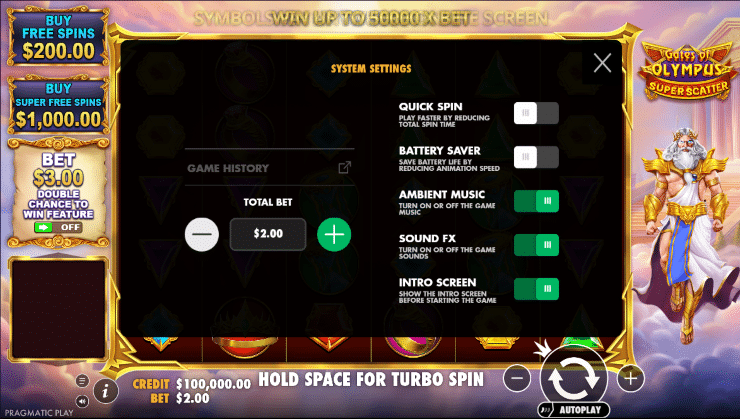
- Predictable control zones (stake, autoplay, settings)
This reduces the risk of cognitive fatigue during extended neutral phases. The user is not forced to “hunt” for state information — it remains in consistent positions across spins.
A well-structured desktop layout is especially important in high-volatility games because perception can swing quickly. The UI needs to remain calm even when outcomes are not.
Mobile UX: Tap Economy & Compression Without Loss
Mobile UX is a compression problem. Gates of Olympus 2 retains its structural clarity by prioritising:
- Large tap targets (stake + primary controls)
- Minimal overlay layering (avoid modal fatigue)
- Clear multiplier tagging and contrast
- Controlled animation speed (no motion overload)
In high-volatility systems, players can drift into repetitive “one more spin” loops. Mobile UX should counter that by maintaining frictionless access to controls without pushing escalation.
A strong mobile layout keeps:
- the grid readable
- the multiplier state visible
- the interaction path consistent
- the controls accessible without accidental taps
Animation Pacing: Functional, Not Decorative
The animation layer is not purely aesthetic. In Gates of Olympus 2 it has structural purpose:
- Confirms a tumble continuation
- Marks multiplier drops
- Distinguishes base vs feature states
- Helps the player track sequence logic
When animations are too fast, outcomes become noise; when too slow, sessions become fatiguing. The optimal pacing is predictable and consistent.
This is why “smooth” isn’t the goal.
Clarity is the goal.
Session Rhythm as a UX Reality
High-volatility distribution creates wave behaviour:
- neutral stretches
- clusters
- occasional spikes
A user-friendly interface helps players interpret this correctly:
- Neutral phases are normal
- Spikes are not “momentum”
- Outcomes are not progressive
Below is a session rhythm model that visualises how short, medium, and long sessions can feel different, even under the same underlying probability structure.
Session Rhythm Model
Risk Structure: What “High Volatility” Means in Practice
In Gates of Olympus 2, risk exposure is not a side effect — it is a core structural property. High volatility means session outcomes can be statistically sparse and psychologically uneven.
Typical volatility effects include:
- Long neutral stretches with low-return spins
- Clustering of value into fewer events
- Irregular timing of spikes
- Larger short-term deviation from long-term expectation
This matters because players often interpret short-term sequences as signal. The system, however, is governed by independence of events. A sequence of losses is not a sign of future “compensation”. A large win is not a sign of momentum.
The correct interpretation is distribution-based: outcomes cluster because probability allows clustering.
Expectation Control: RTP vs Session Reality
RTP is often misunderstood as “how much I should get back”. Structurally:
- RTP is an expected value over very large sample sizes
- RTP does not indicate how quickly outcomes arrive
- RTP does not reduce volatility
- RTP does not remove swing risk
A high RTP game can still deliver long neutral sequences. Volatility defines the shape of the distribution; RTP defines the centre of long-run expectation.
For a high-volatility product, the gap between RTP and short session experience can be large. That is expected behaviour.
Responsible Exposure Principles (Neutral, Practical)
Responsible engagement for high-volatility slots is primarily about boundaries and interpretation.
Useful principles include:
- Budget-first approach: set an entertainment budget and keep it fixed
- Stake stability: avoid progressive escalation during losses
- Time awareness: breaks reduce impulsive continuation loops
- Trigger discipline: do not treat scatters as “progress”
These are not moral statements. They are structural safeguards against misreading variance.
Volatility & Risk Profile
| Factor ↕ | Band ↕ | What it means | Exposure ↕ | Details (mobile) |
|---|---|---|---|---|
| Neutral stretch length | Watch | Long phases with minimal returns are statistically normal |
86 | |
| Multiplier clustering | Watch | Payout mass can concentrate into fewer amplified events |
90 | |
| Bonus outcome dispersion | Mid | Some features remain low-output; a minority drive most value |
74 |
RTP Configuration & Structural Parameters
| Parameter | Typical value | What it controls | Relevance |
|---|---|---|---|
| Volatility | High | Distribution shape (variance exposure) | High |
| RTP | Configurable | Long-term expected return (not short-term) | High |
| Cluster threshold | 8+ symbols | Win trigger rule across the grid | Mid |
| Grid size | 6×5 | Symbol density and tumble capacity | Mid |
| Bonus trigger | 4+ scatters | Access to alternate distribution regime | Mid |
| Multiplier persistence | Bonus only | Controls long-tail amplification | Watch |
RNG Integrity: What “Random” Means Operationally
Gates of Olympus 2 is built on RNG-driven outcome generation. For product evaluation, the critical point is not the branding of “randomness”, but the operational implication:
- each spin is independent
- prior outcomes do not influence future outcomes
- perceived streaks are statistical clustering, not system adaptation
A high-volatility distribution can produce runs of low-return outcomes. This can look like a trend, but it is not a directional property.
From a player’s perspective, RNG integrity means the system does not:
- correct for losses
- “warm up” before a win
- increase probability based on time spent
- respond to behaviour
This matters because many misconceptions about slots are behavioural interpretations of variance.
A clean technical framing removes the idea of progression. The game is not progressive. It is probabilistic.
Certification Mindset: What It Covers (Without Overclaiming)
Operationally, certified RNG environments focus on:
- unpredictability of outcomes
- statistical uniformity over large sample sizes
- reproducibility of audit testing under controlled conditions
The practical meaning is that the same rules apply continuously.
Certification does not mean a session will be smooth. It means the distribution behaviour is consistent with the model over time. In a high-volatility slot, consistency can still feel unstable in short windows.
That is not contradiction. It is the nature of variance.
Deployment Notes: RTP Variability & Product Consistency
RTP can be configurable depending on the platform and market deployment. That is standard in modern slot distribution.
Two points remain stable:
- RTP is a long-run expectation measure
- volatility describes the shape and dispersion of outcomes
Changing RTP does not change the logic of:
- tumble continuation
- scatter threshold behaviour
- multiplier mechanics
- bonus state persistence
In other words, the mechanical identity remains stable across deployments. The expectation value may shift, but the user experience profile (variance pattern) stays aligned with high-volatility design.
Long-Run Probability: How to Interpret the Product Correctly
The core evaluation mistake with high-volatility slots is treating short sessions as representative.
Better framing:
- short sessions: can be dominated by neutral phases
- medium sessions: can show some clustering patterns
- long sessions: can expose wider variance and occasional spikes
None of these are guaranteed. They are exposure ranges.
Gates of Olympus 2 is structurally designed for concentrated payout events, not continuous micro-reward cadence. Players looking for frequent low-size returns should interpret this as a mismatch in product intent.
The slot’s identity is built around:
- event amplification (multipliers)
- sequence amplification (bonus persistence)
- distribution tail exposure (high volatility)
This is consistent, transparent product architecture.
Compliance Positioning: Clear Risk Communication
A responsible presentation of the slot should:
- explain volatility in practical terms
- separate RTP from short-term outcomes
- avoid implying patterns or guarantees
- avoid messaging that suggests “wins are due”
Operator-level content does not sensationalise. It clarifies structure and risk exposure.
That is the right posture for high-variance products.